


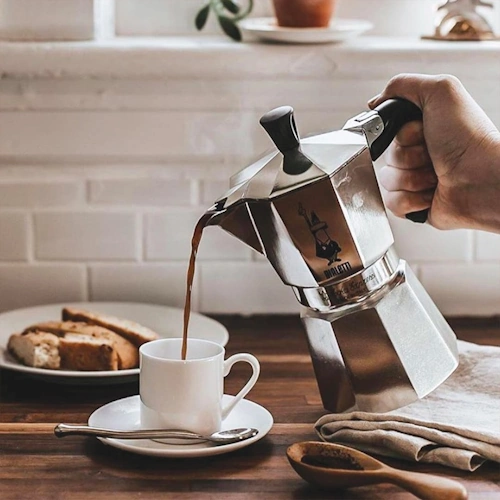
Who does not own or has owned a classic Moka espresso maker capable of flooding the entire kitchen with its coffee aroma? However, not everyone knows the origin of this iconic object, which soon became a symbol of Italy and its entrepreneurial skills.
From the washing machine (or almost) to the coffee maker!
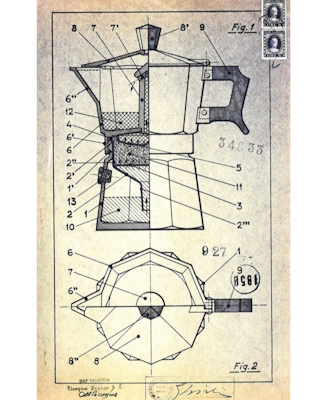
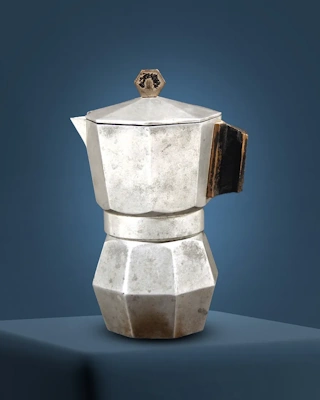
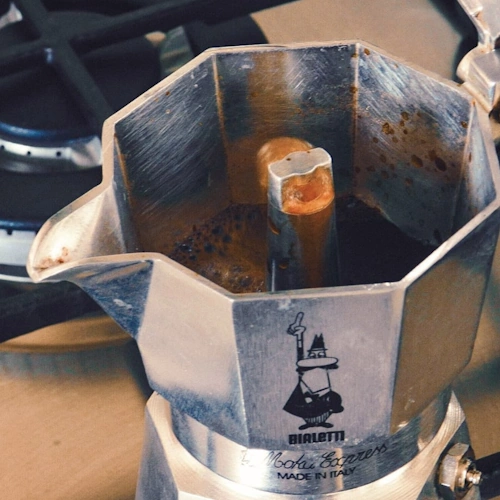
The story goes that Alfonso Bialetti came up with the idea of the classic octagonal coffee pot while watching his wife do the laundry. In those days, in fact – we are talking about 1933 – the ‘lisciveuse’ was used to wash clothes. This was an ancestor of the washing machine and consisted of a sort of large pot whose central part had a tube with a perforated upper surface. Cloths, water and lye (the detergent of the time) were placed in the pot. Once the water came to a boil, it flowed up the tube and down again, making the most of the detergent and soaking the cloths evenly. The moka coffee maker uses the same boiling mechanism as the water, with coffee powder instead of lye and makes the most of the qualities of aluminium, a material that is particularly suited to this use.
From artisan to industrial production
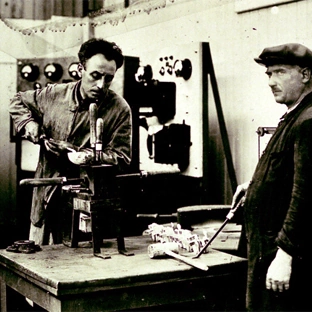
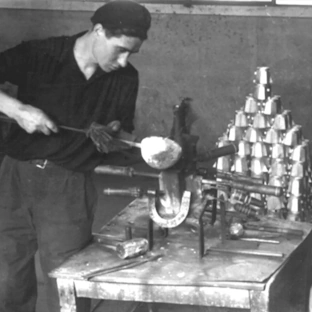
At the time, Alfonso Bialetti owned a small foundry in Omegna (VB) for the production of semi-finished aluminium products, but from 1933, all production was dedicated to the Moka coffee maker- named after a city in Yemen, famous for the production of high-quality Arabica coffee. Alfonso Bialetti was able to produce around ten thousand pieces per year. Still, his production remained artisan until after the Second World War, when Renato, Alfonso’s son, took over the company’s management. Renato Bialetti started an industrial-type Moka coffee machine production, which represented a real revolution in how Italians drank coffee, as they could prepare and drink coffee in their homes, just like at the bar. The new factory opened by Renato had substantial production capacity: 18,000 coffee makers a day, or 4 million a year, came out of its gates, and it is estimated that until its closure in 2010, over 300 million coffee makers were made!

A logo that made history
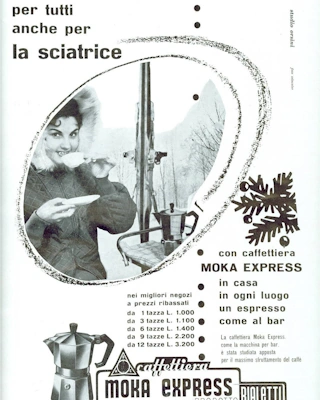
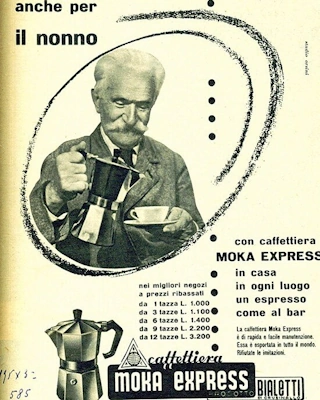
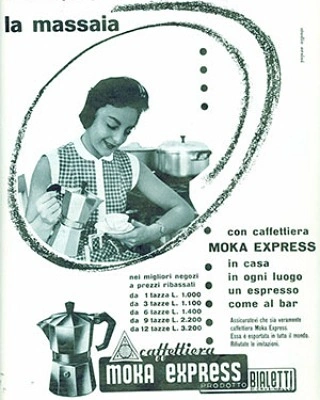
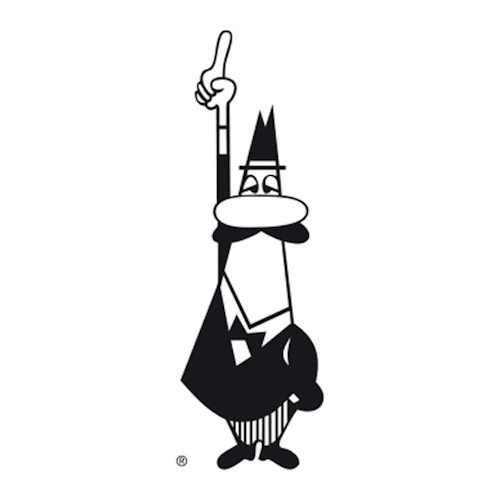
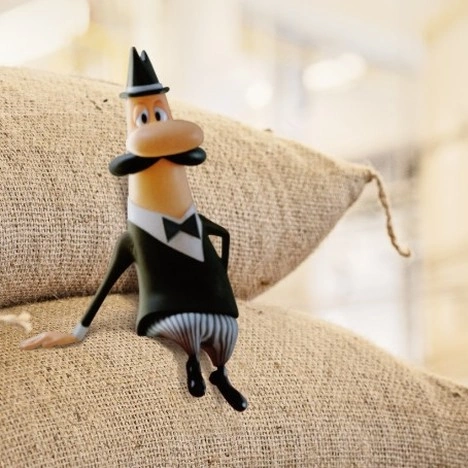
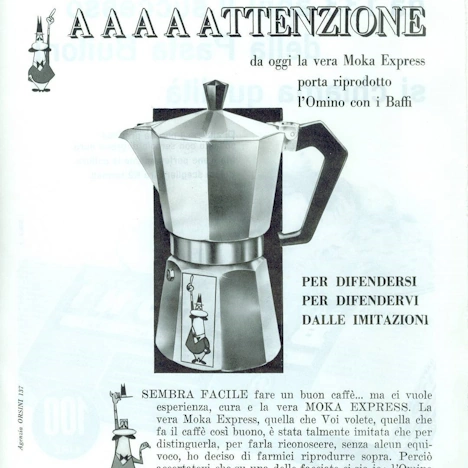
Bialetti’s success is undoubtedly also linked to the advertising campaigns and the logo designed by Paul Campani, the funny ‘little man with a moustache’ inspired by Renato Bialetti himself. The slogan ‘It looks easy… making good coffee’ was to become an advertising catchphrase in the 1950s.
Renato Bialetti and Aristotle Onassis, influencer ante ahead of his time
An anecdote from Renato Bialetti’s life that became legendary was his chance meeting with the billionaire Aristotle Onassis. Renato, who was in a hotel to present the coffee maker to some French customers who were somewhat perplexed by the object, met Onassis by chance. Bialetti followed him into the bathroom. Taking his courage in both hands, he told him he was a young Italian entrepreneur and asked him to pretend to be his customer to convince the French of the product’s goodness. Onassis, an influencer ahead of his time, played along: he pretended to know Bialetti and told him it was the best coffee he had ever drunk!
Evolution of a myth
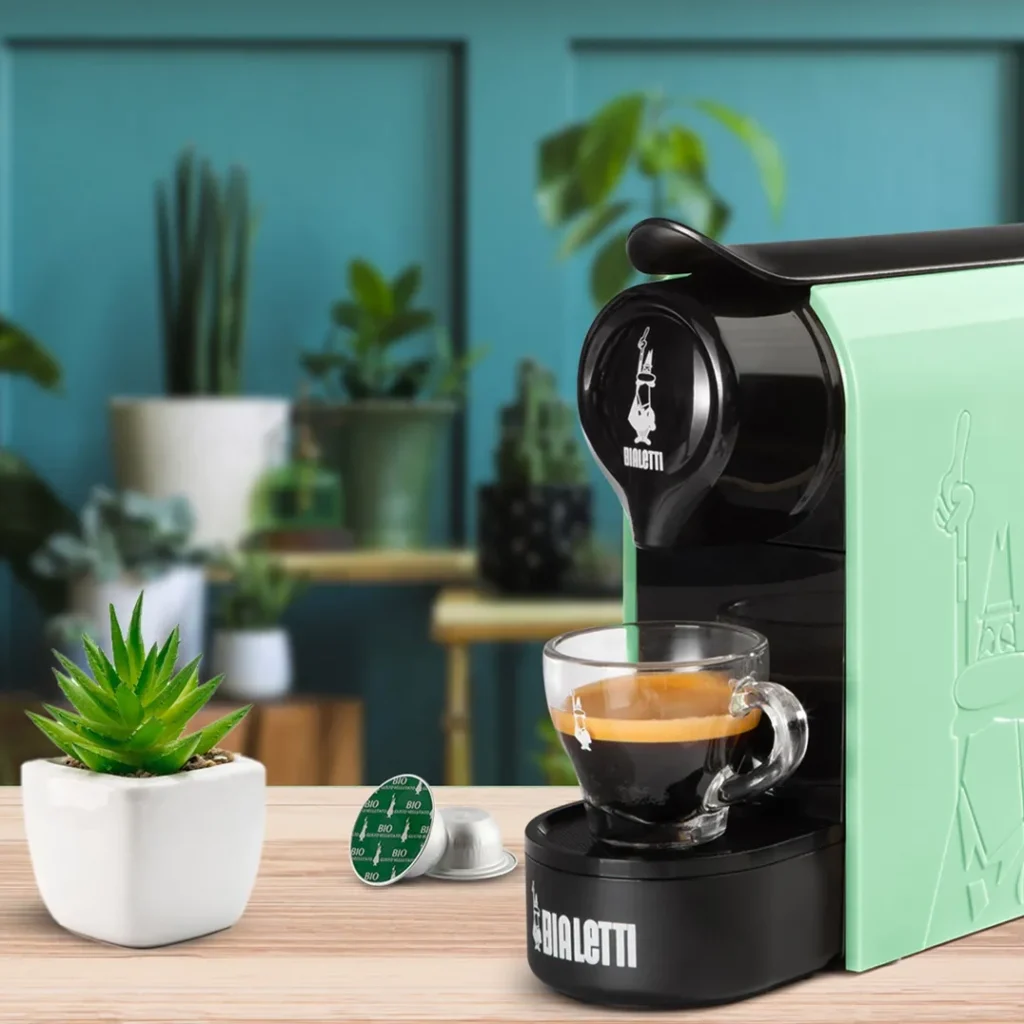
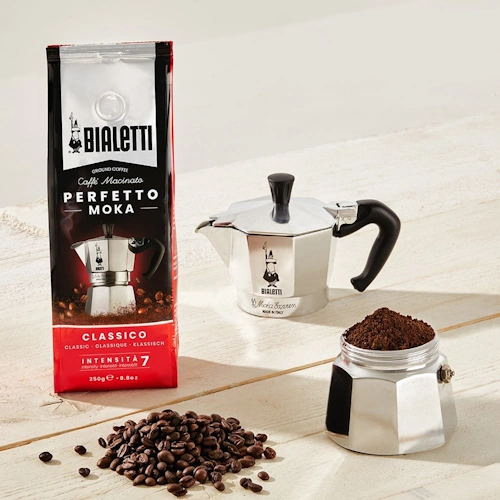
In 1986, Bialetti was sold to Faema, and a new change of ownership took place in 1993. Following this second acquisition by Rondine Italia, the Bialetti Industrie group was born, which was listed on the stock exchange in 2007 and launched the espresso system with ‘Caffè d’Italia’ capsules in 2010. In 2014, the Moka coffee maker for induction cookers was created. It combines the aluminium of the lid and collector with the steel of the boiler and funnel. Finally, in 2021, there was a return to the origins with the launch of the Perfetto Moka blend, dedicated to those who love Moka and remain faithful to tradition!
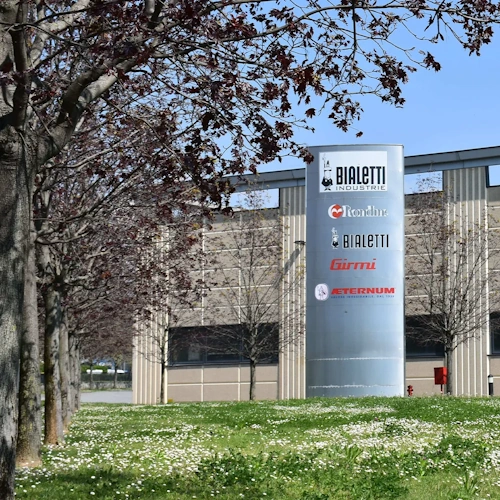

Today, Bialetti Industrie SpA, headquartered in Coccaglio (BS), has 1300 employees, is listed on the Milan stock exchange, has a turnover of hundreds of millions of Euros and is led by CEO Egidio Cozzi.
Congratulations to those who build, innovate and bring the Made in Italy system for making coffee to the world!
Discover other Made in Italy outstanding companies from Lombardy.