

When it comes to liqueurs that represent Italy, Cynar is an icon that cannot be overlooked. An artichoke-based bitter liqueur with a unique and recognisable taste, it was created thanks to a combination of entrepreneurial stories, creative insights, and advertising campaigns that marked an era.
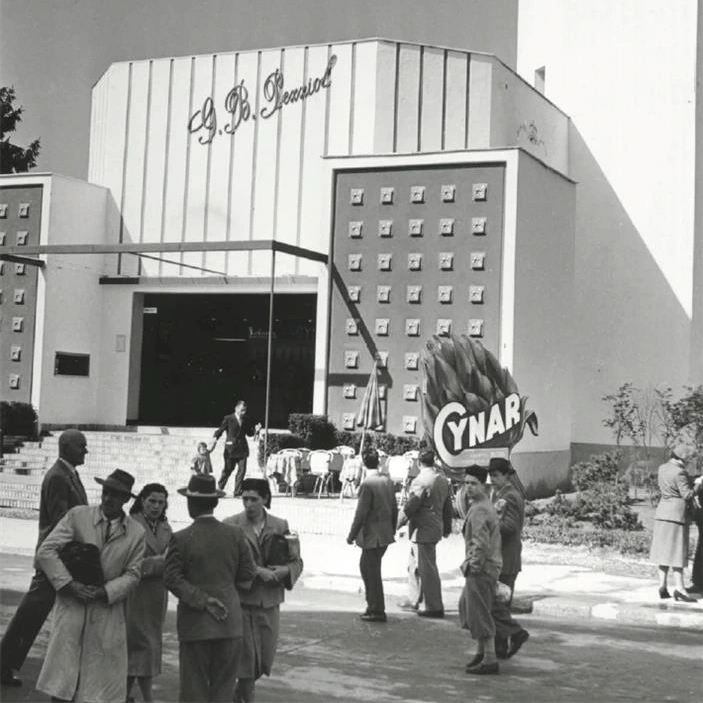
Its history has its roots in Padua, in the G.B. Pezziol Distillery, already famous in the 19th century for VOV, the liquid zabaglione liqueur created by pastry chef Gian Battista Pezziol. After difficult years, the distillery was purchased in 1932 by the Dalle Molle brothers, visionary entrepreneurs who transformed it into a laboratory of innovation.
Rino Dondi Pinton’s idea
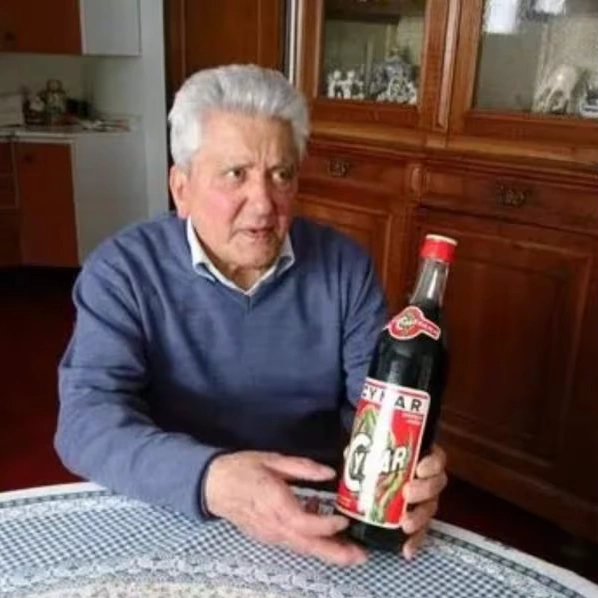
It was in Padua in 1948 that a young man, Rino Dondi Pinton, then 27, manager of the Pezziol distillery and a passionate distiller, had an intuition that would change the history of the brand. Together with Angelo Dalle Molle, he developed a secret recipe that combined artichoke leaves with thirteen aromatic herbs. Initially known by the code name CaB1, the new blend was tested in bars in Padua and Venice until a name was found that would become famous: Cynar, coming from Cynara scolymus, the scientific name of the artichoke.
The power of communication
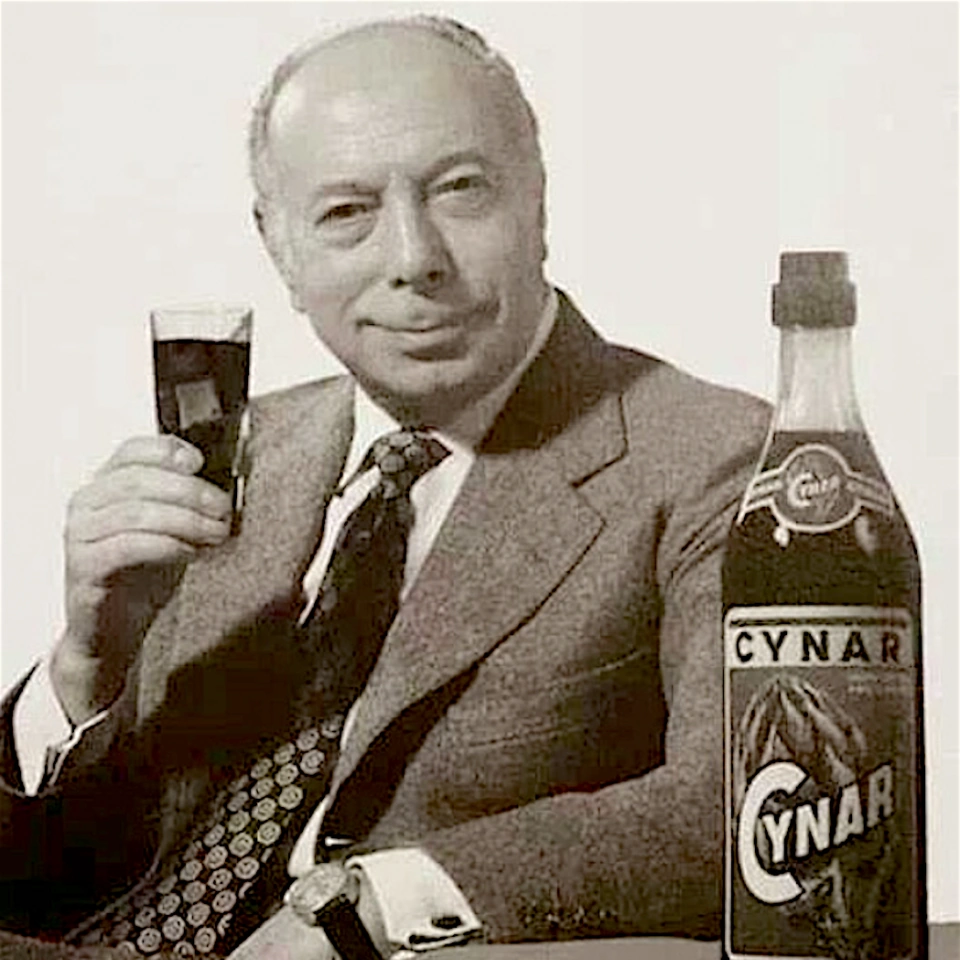
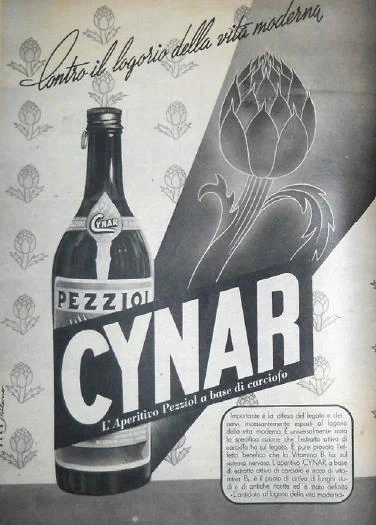
Cynar officially hit the market in 1952, but its success was due to a marketing campaign that went down in Italian advertising history. In 1974, a television spot was broadcast on Carosello where actor Ernesto Calindri appeared sitting at a table in the middle of the traffic in Largo Mazzini in Monza, sipping a Cynar “against the wear and tear of modern life”. That scene immediately became iconic, and the slogan entered common parlance, transforming Cynar from a simple liqueur into a genuine cultural phenomenon.
From economic boom to the international stage
During the economic boom, Cynar quickly won over consumers to the extent that by 1955, a Doxa survey ranked it second among the most popular aperitifs in Italy, just behind Campari. The company grew, consolidated its position in Milan and joined the Grandi Marche Associate Group, alongside brands such as VOV and Biancosarti.
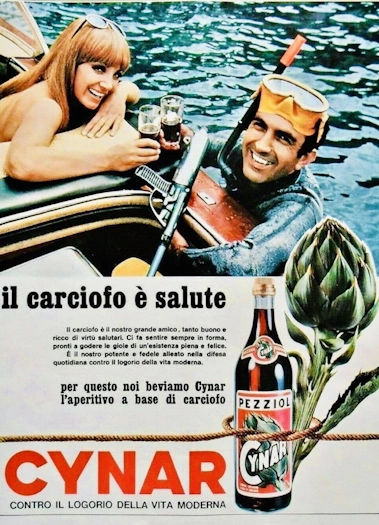
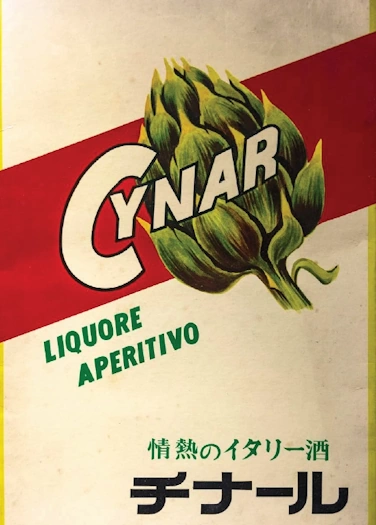
The decisive step came in the 1990s, when Cynar joined the Campari Group, which relaunched its international distribution. Today, it is one of the best-selling Italian aperitifs and a favourite ingredient of bartenders around the world for preparing original and contemporary cocktails.
Cynar today: a classic that speaks in the present
Cynar’s success lies precisely in its ability to remain true to its soul, constantly reinventing itself. While in the 1970s the slogan referred to the stress of city traffic, today it has been reinterpreted in light of the frenetic pace of work and digital life. Cynar thus becomes a bridge between past and present, capable of winning over new generations thanks to its herbaceous, authentic, and less sugary taste, perfectly in line with current trends in mixology and “conscious” aperitifs.
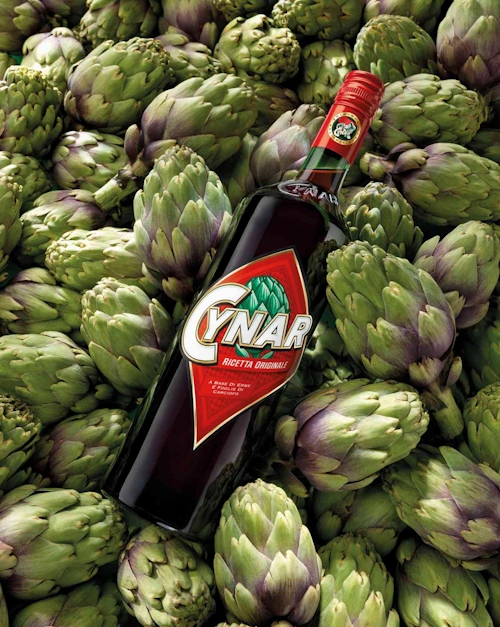
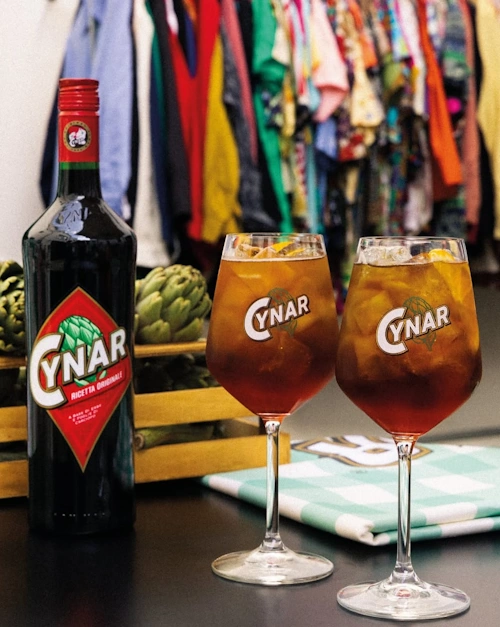
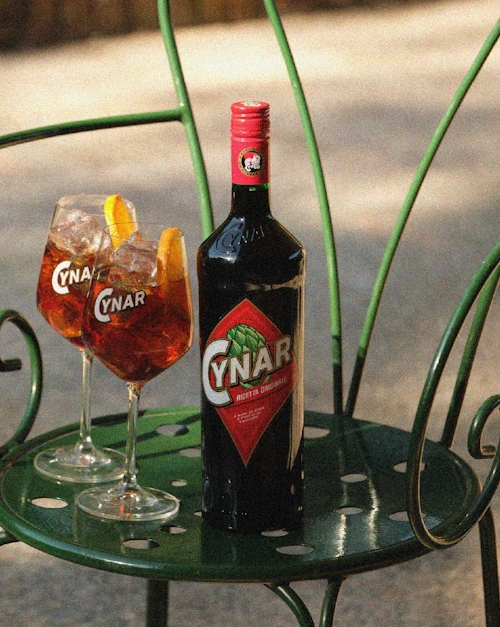
Long live a Made in Italy icon
The history of Cynar is inextricably linked to that of its inventor. Rino Dondi Pinton passed away in 2025 at the venerable age of 103, a milestone that seems to confirm the goodness of his “elixir.” In 2021, the President of the Republic, Sergio Mattarella, awarded him the title of Knight Grand Cross, recognising not only his long life, but also the value of an invention that brought Italian taste to the world.


More than seventy years after its creation, Cynar continues to represent a Made in Italy success story: from the laboratory in Padua to international prominence, from the bottle with the artichoke to new trends in mixology, to the return of the slogan that made it immortal. An amaro that remains faithful to its original mission: to help people rediscover a little lightness, against the wear and tear of modern life.
Learn about other oustanding companies from the Veneto region.