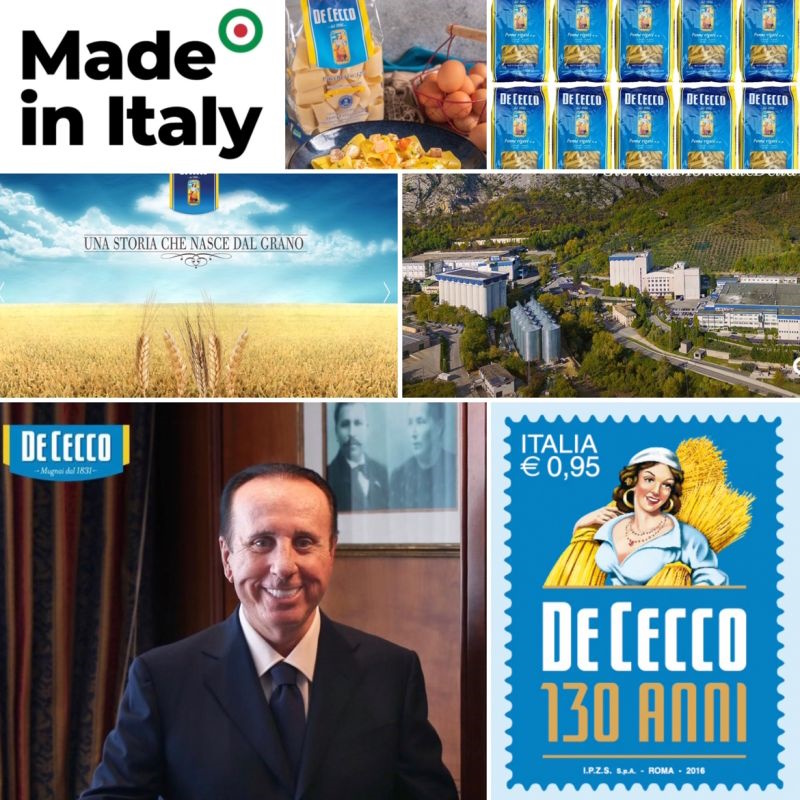

‘Strictly’ is a word that now, thanks to slogans, we identify with one of the most important and most representative Made in Italy brands: De Cecco pasta!
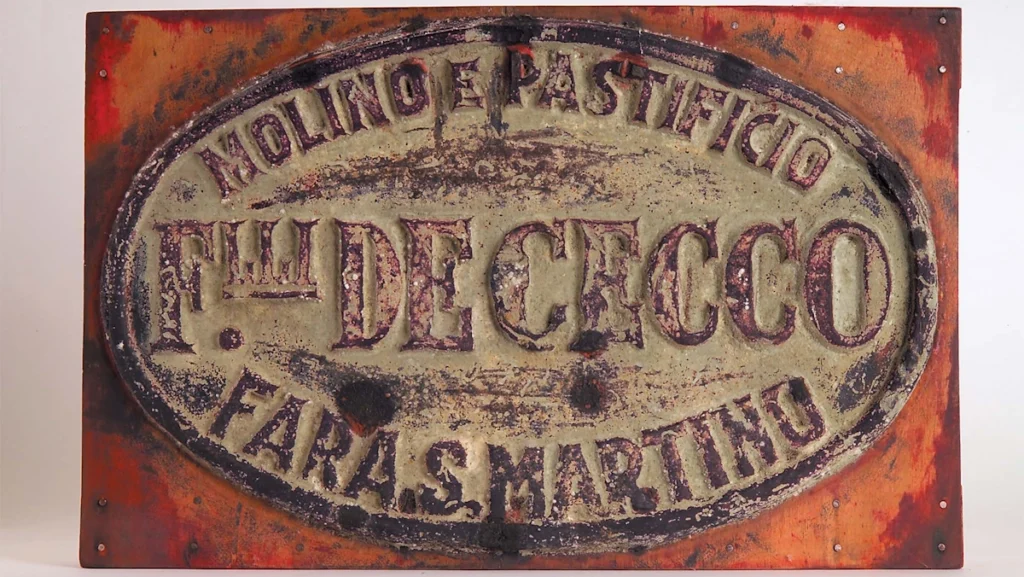
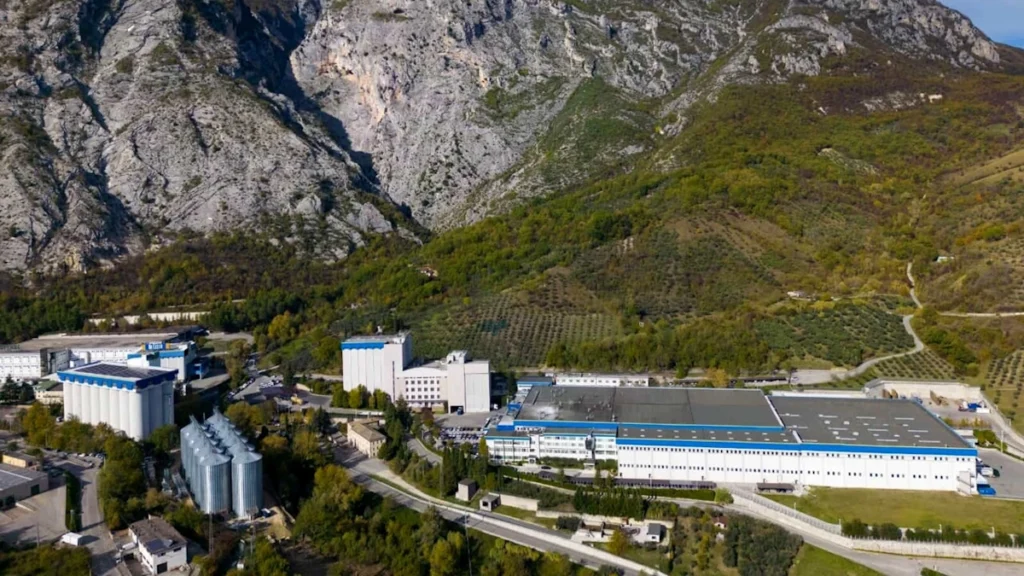
The history of De Cecco, a pasta factory in Abruzzo with a tradition stretching back almost two hundred years, tells of resourcefulness and values handed down from father to son. Starting in 1831, Nicola Antonio De Cecco began the business with the Molino di Fara San Martino (CH) and was soon joined by his son Filippo in producing quality flour and semolina.
A very ancient history
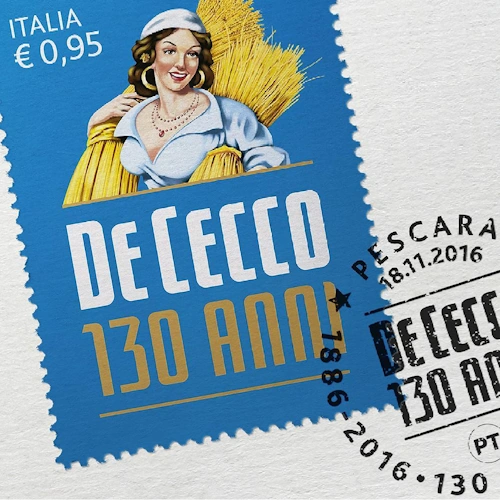
Pasta De Cecco’s packaging has always indicated the year the pasta factory was founded, which until recently was believed to be 1886. Recently, however, some research has revealed that the De Cecco family’s milling activity dates back to 1831, and the date on the pasta has also been changed!
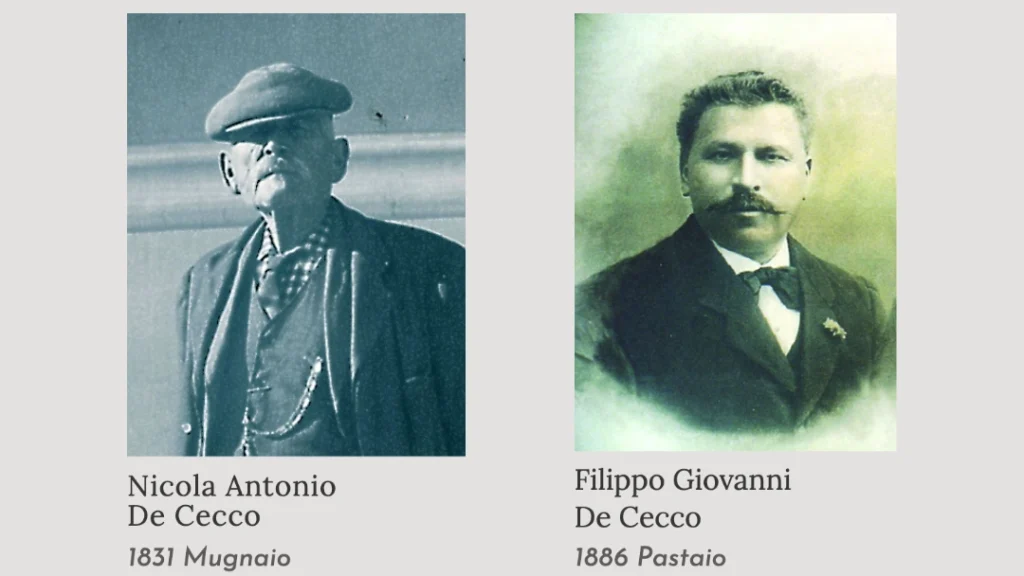

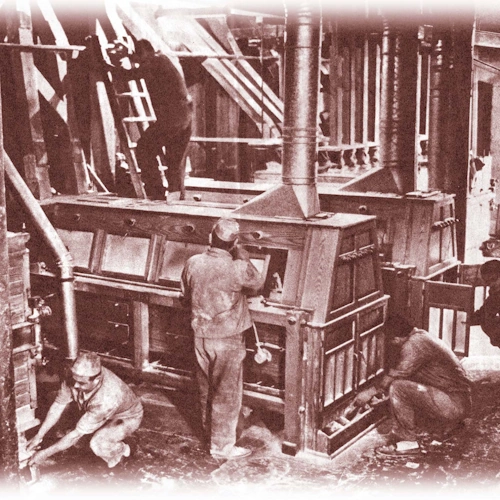
However, 1889 was a turning point for production. That year, intending to speed up pasta production and free it from climatic factors, Filippo Giovanni De Cecco developed a drying method. It was based on a hot-air ventilation system and an aspirator, with a perforated box inside which the pasta was spread out to dry on removable trays. The machine has two separate chambers, one bright and the other dark, to reproduce natural drying in sunlight and ‘resting’ at night.
The international calling of a visionary entrepreneur
As the visionary entrepreneur he was, Filippo Giovanni decided, back in 1893, to participate in the World’s Columbian Exposition in Chicago to introduce pasta to the public and open up new markets. The participation was immediately a great success, and Filippo De Cecco received the gold medal and diploma of merit ‘Exhibit: Macaroni Vermicelli – award – for superior manufacture, colour and firmness of form after cooking‘. Since then, the Abruzzo pasta factory has participated in all the most prestigious world events, winning ten medals and a diploma of honour.
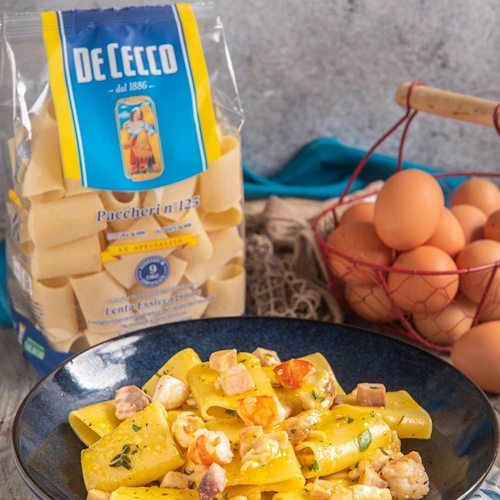
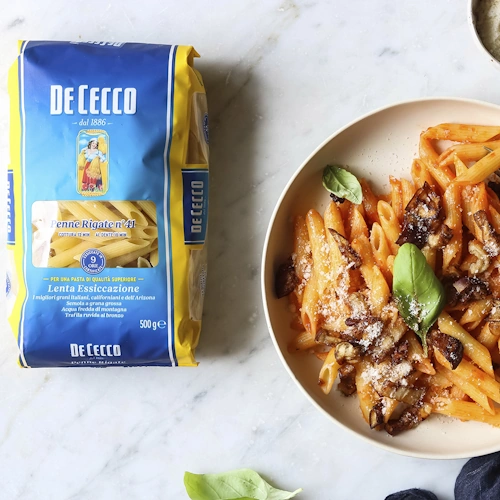
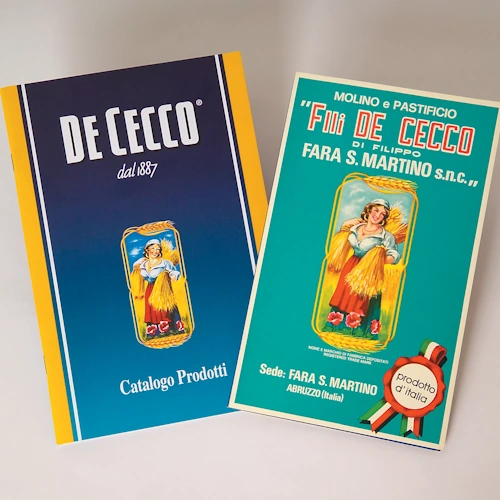
In 1905, Filippo De Cecco was appointed Cavaliere del Lavoro (Knight of Labour). In 1908, the gleaner in a traditional Abruzzi costume clutching a bundle of ears of wheat became the company logo. At this time, the factory had 30 rooms, including the pasta factory, the mill, the warehouse, and the pasta shop.
Difficult years and recovery
The company inevitably experienced a difficult period during the years of the two World Wars. However, it was ready for the upturn with the rebuilding of the historical factory in Fara S. Martino and the opening of a new pasta factory in Pescara.
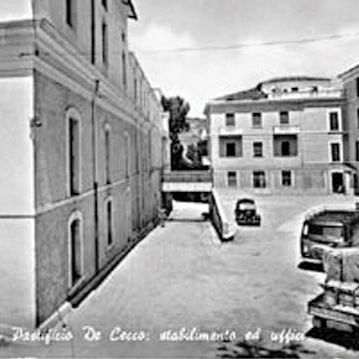
In the 1970s and 1980s, the company experienced exponential growth, so much so that a new factory was built in Fara San Martino with six continuous lines for pasta production. When the first lines came into operation, the covered surface area was 20,000 m². In the 1980s, De Cecco expanded its production facilities until it could market over 30,000 tons of pasta annually and process 500 tons of milled wheat daily.
Diversifying to be competitive
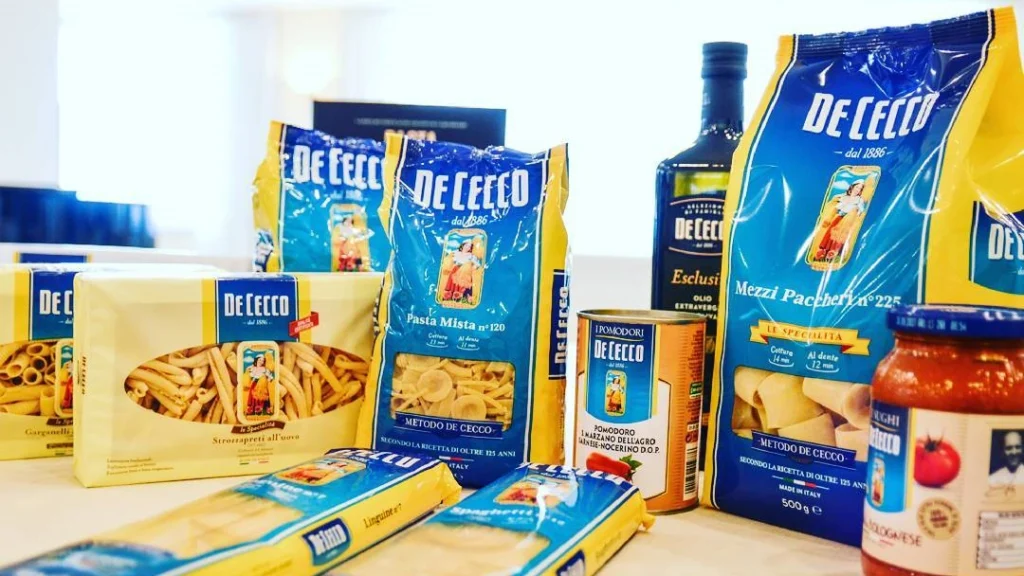
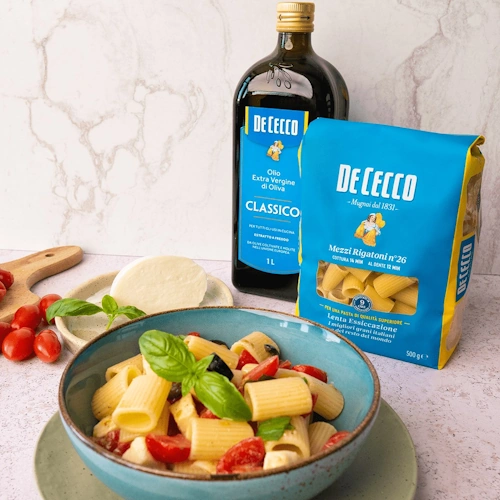
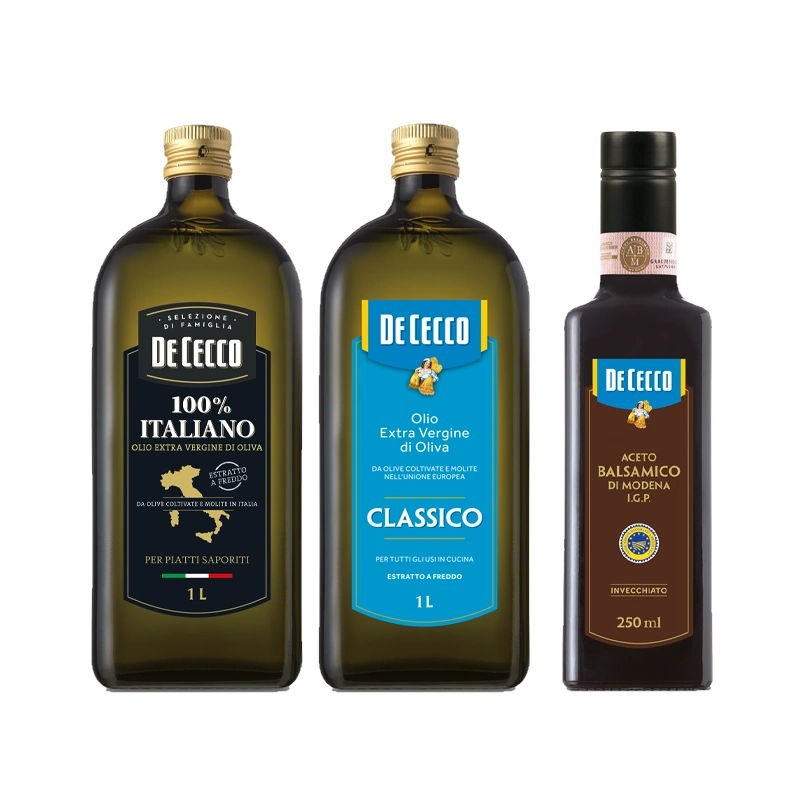
The company also grew by differentiating its production. In the 1980s, the company ‘Olearia F.lli De Cecco di Filippo – Fara San Martino – S.r.l.’ was founded for bottling and marketing extra virgin olive oil. Other products were sauces and tomato derivatives, rice, organic products and, in 2013, bread substitutes ‘I Grani De Cecco’.
De Cecco’s growth continued into the 1990s, and the company’s production capacity reached 20 tons of pasta per hour!
A success that continues over time
Today, De Cecco is a food group (among the top ranking for growth in Food) with certifications that cover all seven parameters of the production process that determine the quality of its pasta.
Filippo Antonio De Cecco, who was appointed Cavaliere del Lavoro in 2001, is the President and CEO; the headquarters are still in Fara San Martino (Chieti). With several production plants and hundreds of employees, the company has a turnover of hundreds of millions of euros and sells to all continents.
Congratulations to those who bring the tradition of Italian pasta to the world!
Learn about other Made in Italy companies spreading the culture of pasta.