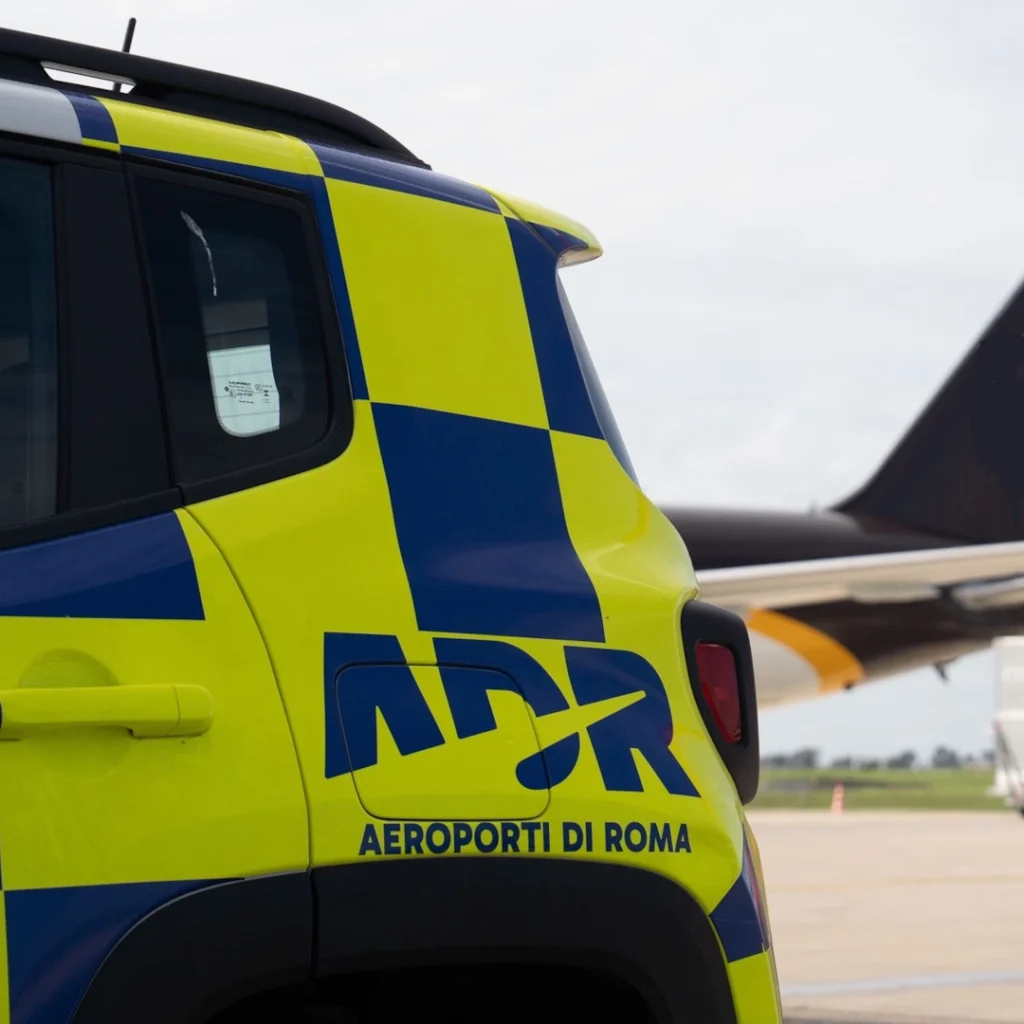

For millions of travelers every year, their first encounter with Italy doesn’t happen in front of the Colosseum or in a historic square, but at the airport. It’s there, among the lighted runways and the large, crowded terminals, that the journey through our country truly begins. The story of Aeroporti di Roma is precisely the story of this first encounter: a tale of infrastructure, innovation, and culture that accompanies the arrival of those coming from all over the world.
The origins of Roman aviation
The roots of the capital’s airport system date back over a century. In 1916, Ciampino’s “Giovan Battista Pastine” airport was opened, initially intended for airships and military operations. For many years, it was the city’s only airport, a key hub for the early development of Italian aviation.
As time passed, however, air traffic began to grow rapidly, and Rome needed a larger airport capable of supporting the new international routes. Thus, on January 15, 1961, Leonardo da Vinci Airport in Fiumicino was opened, bound to become, within a few decades, Italy’s main hub and one of the most important in the Mediterranean.
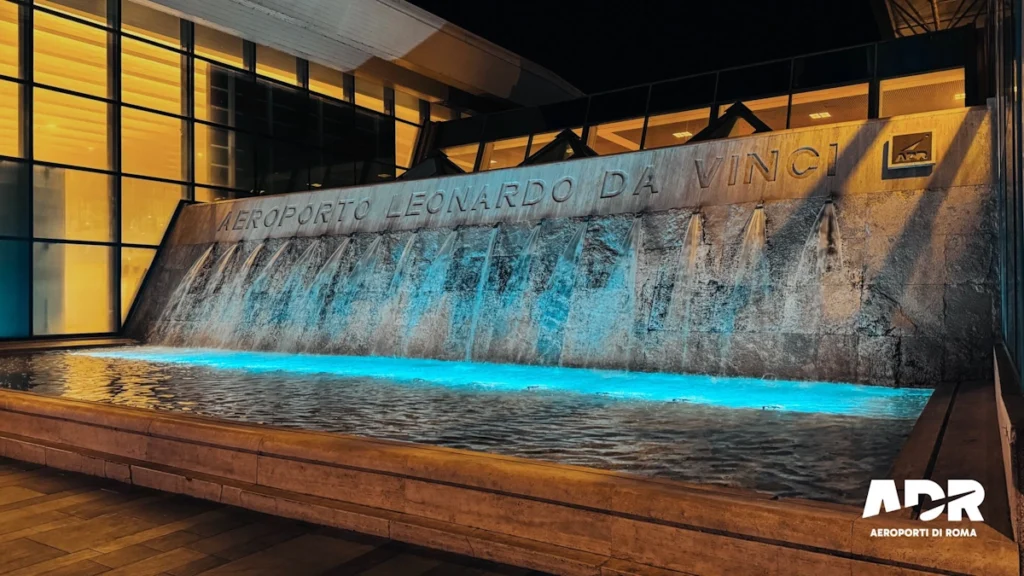
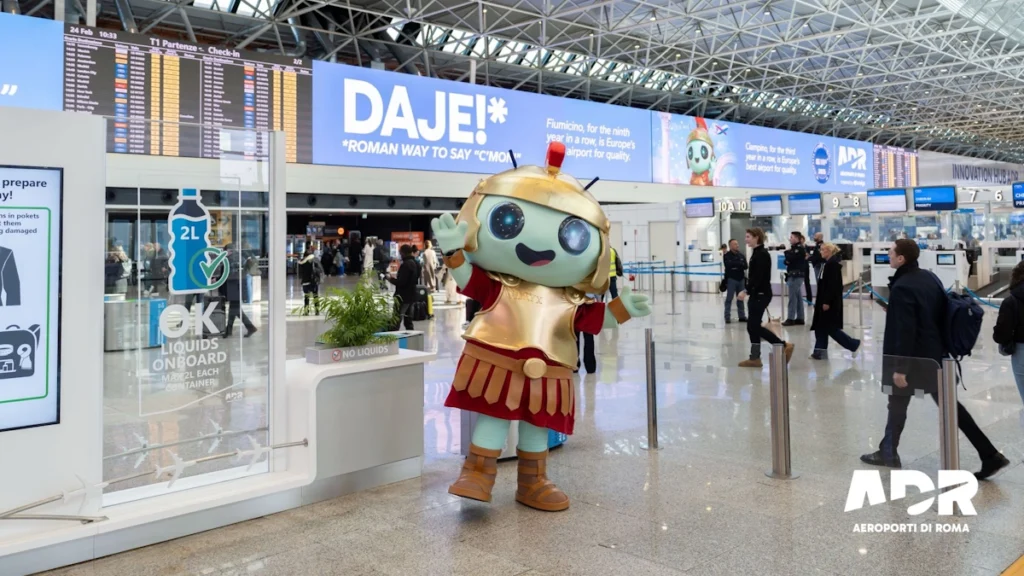
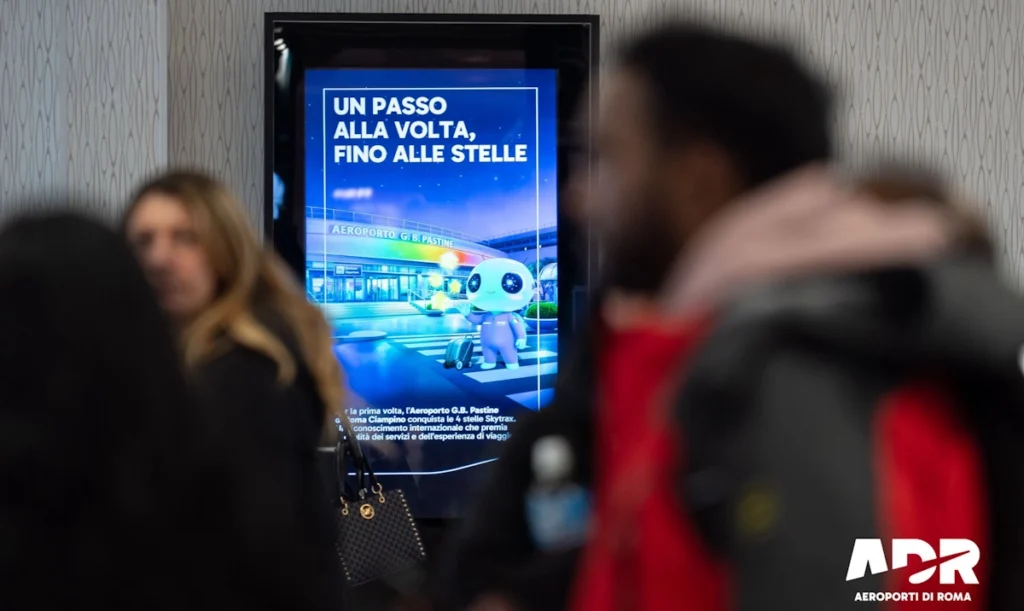
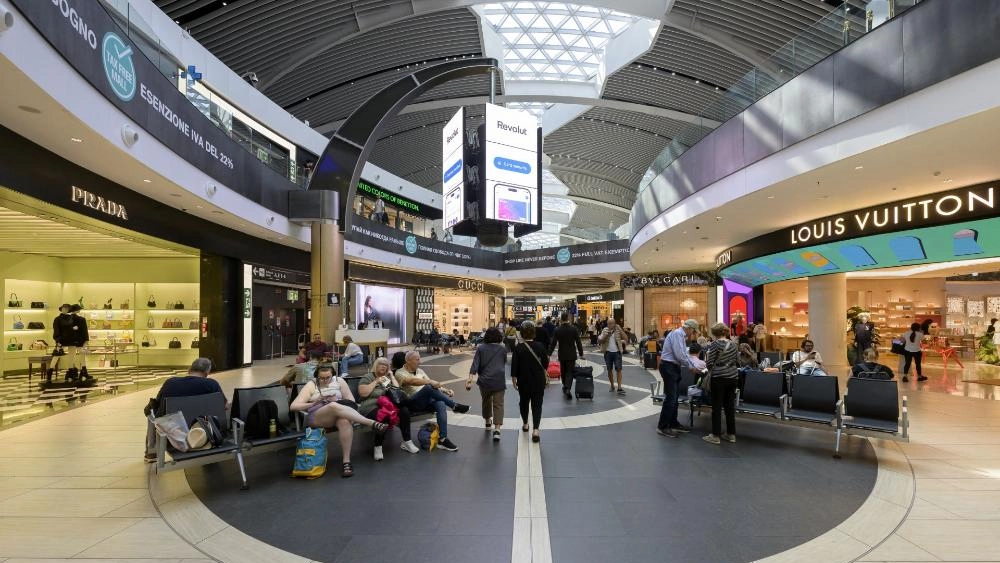
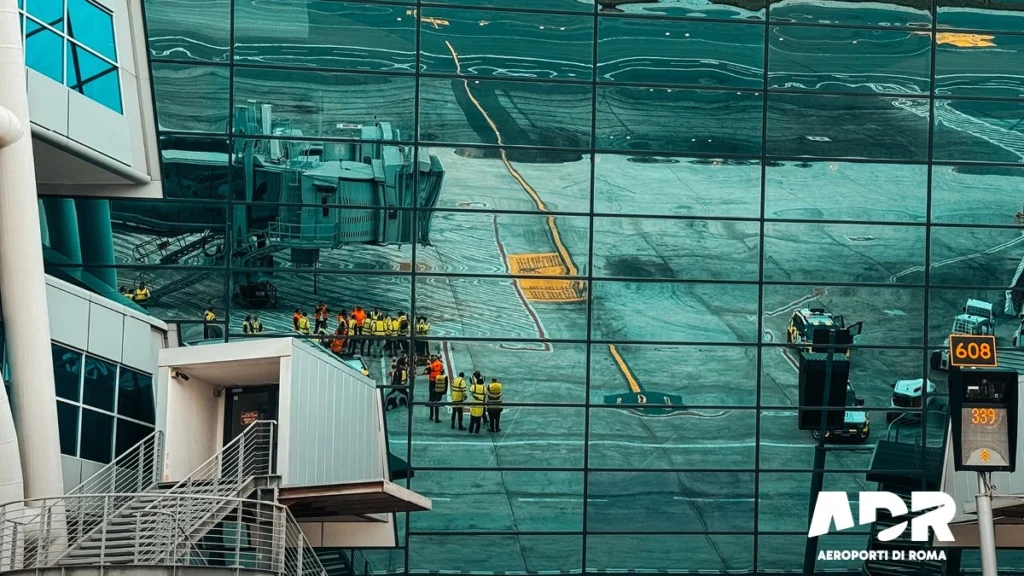
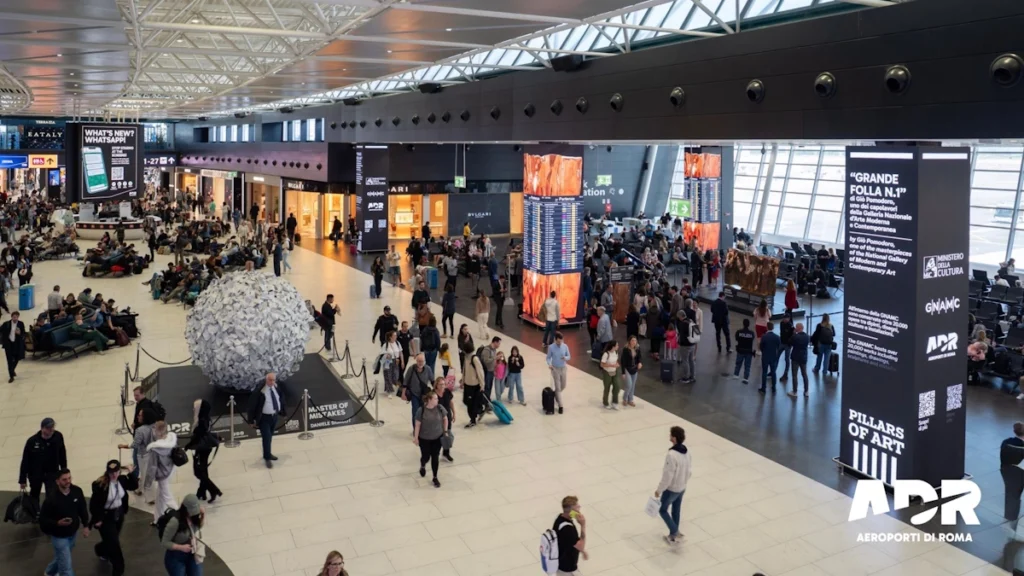
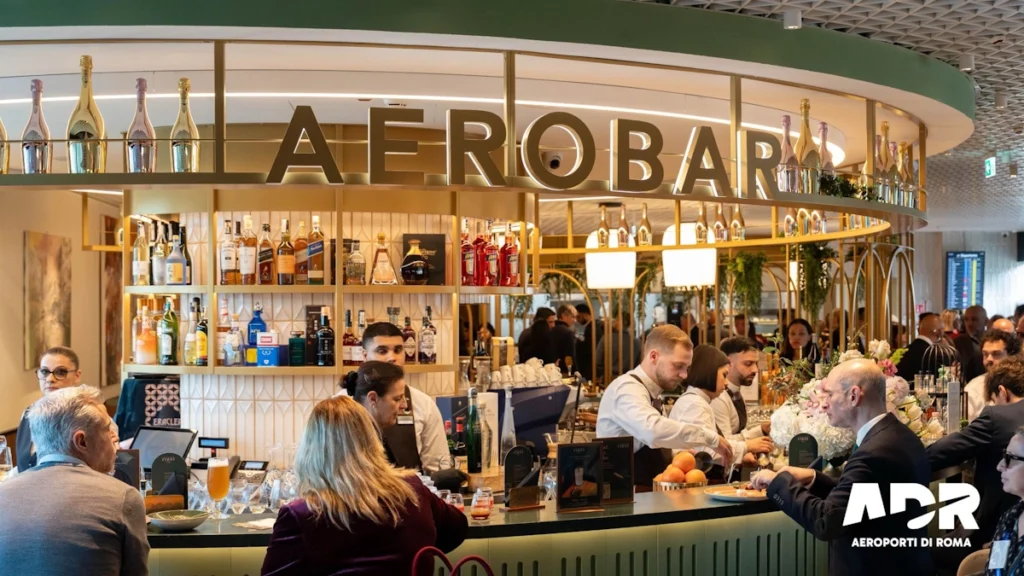
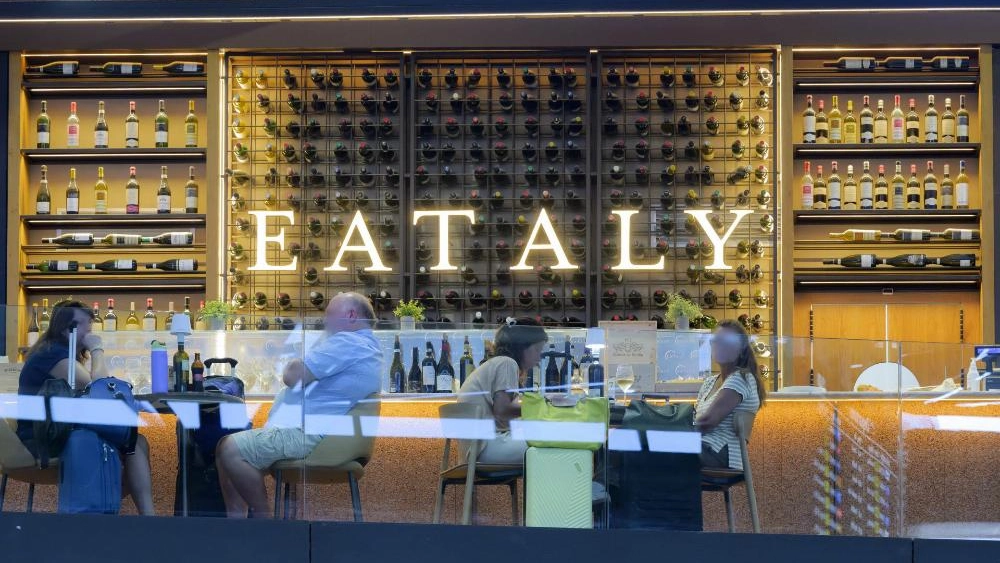
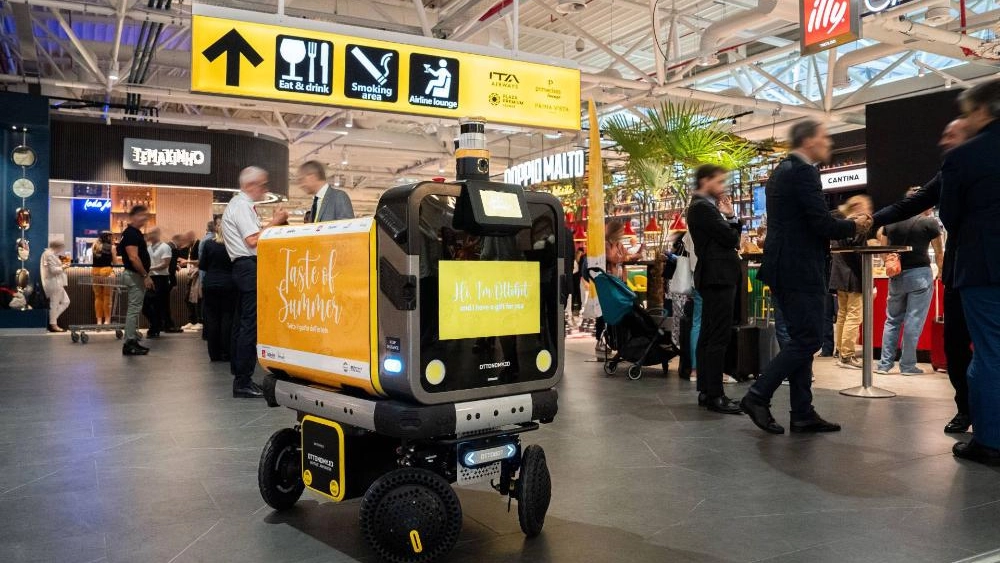
In 1974, Aeroporti di Roma was officially established, tasked with managing and developing the capital’s airports and supporting their growth over time. Today, the company is part of the Mundys Group, a leading global infrastructure operator, and manages and develops Rome Fiumicino and Ciampino airports, as well as related airport management activities.
When the airport becomes an experience
Over the years, Aeroporti di Roma has transformed the very idea of an airport, envisioning it as a space capable of offering travelers a complete experience. Not just departures and arrivals, but also culture, entertainment, and the discovery of Italy’s heritage.
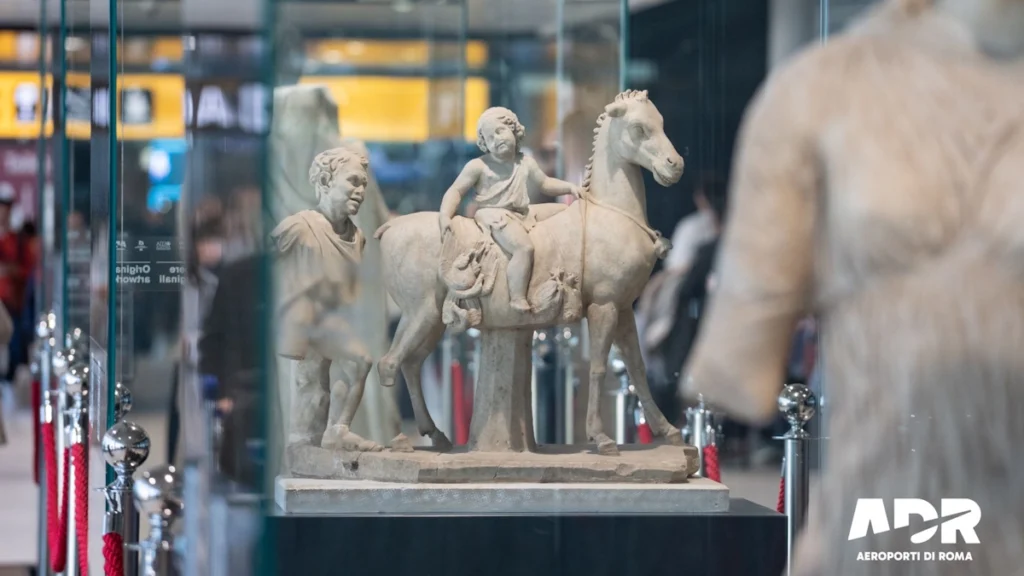
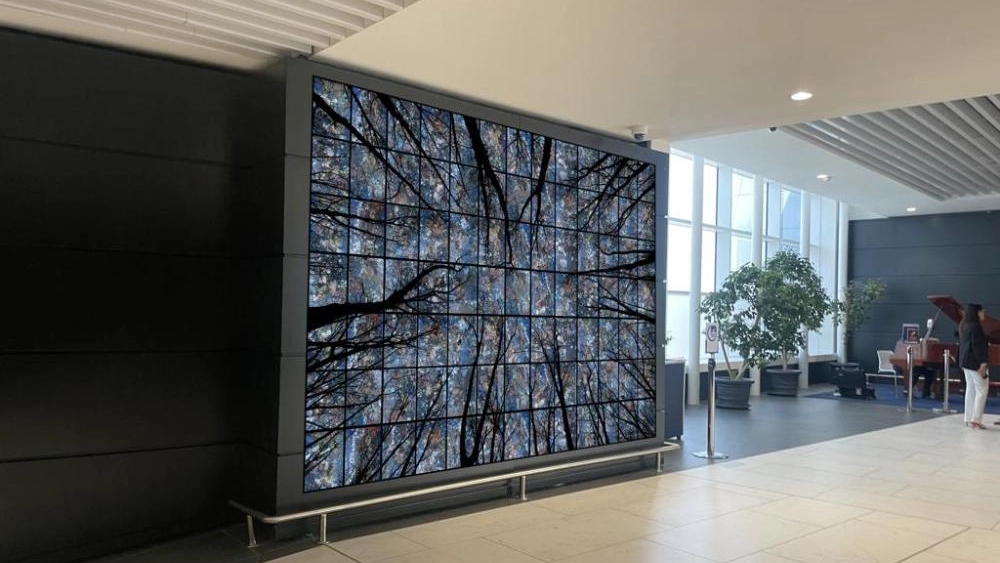
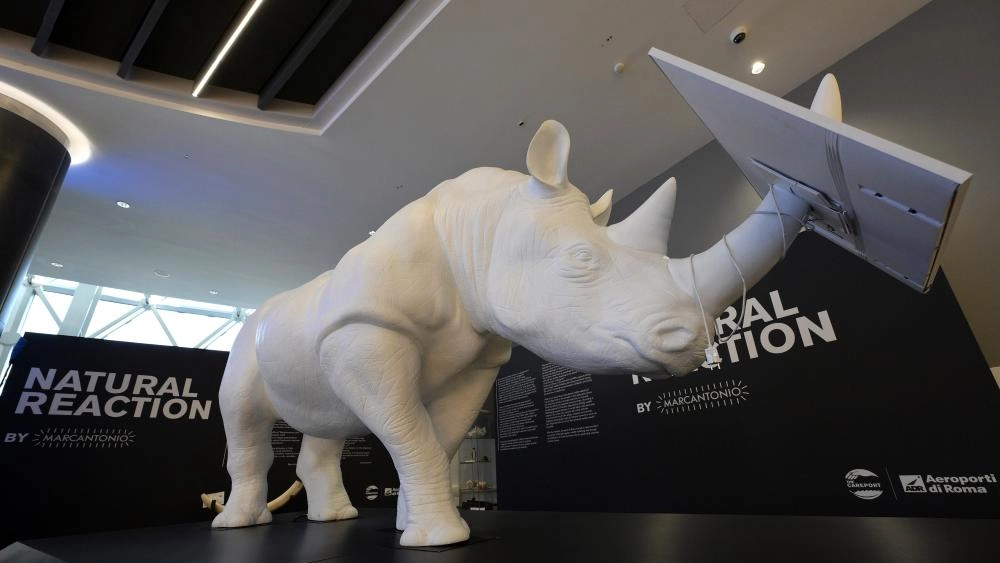
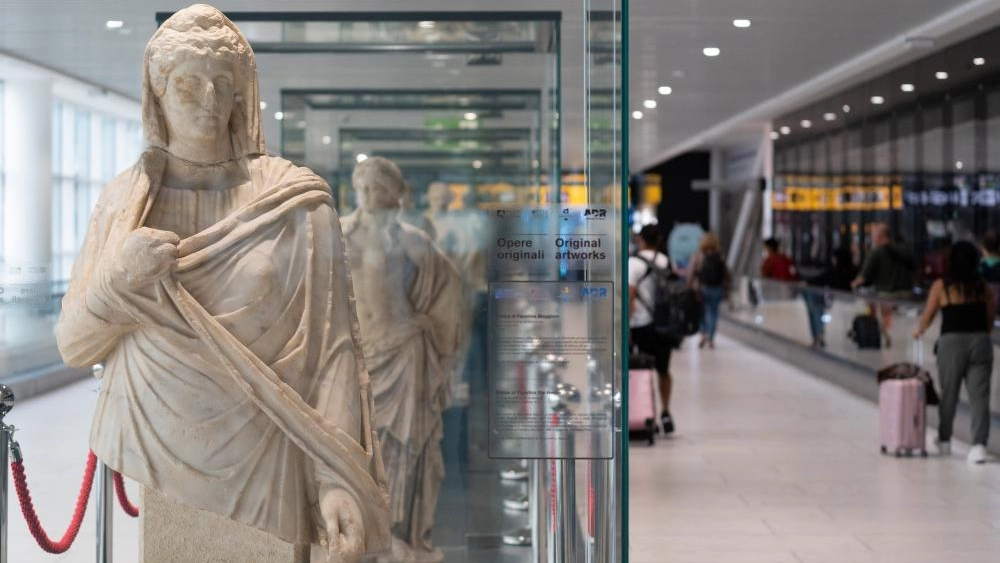
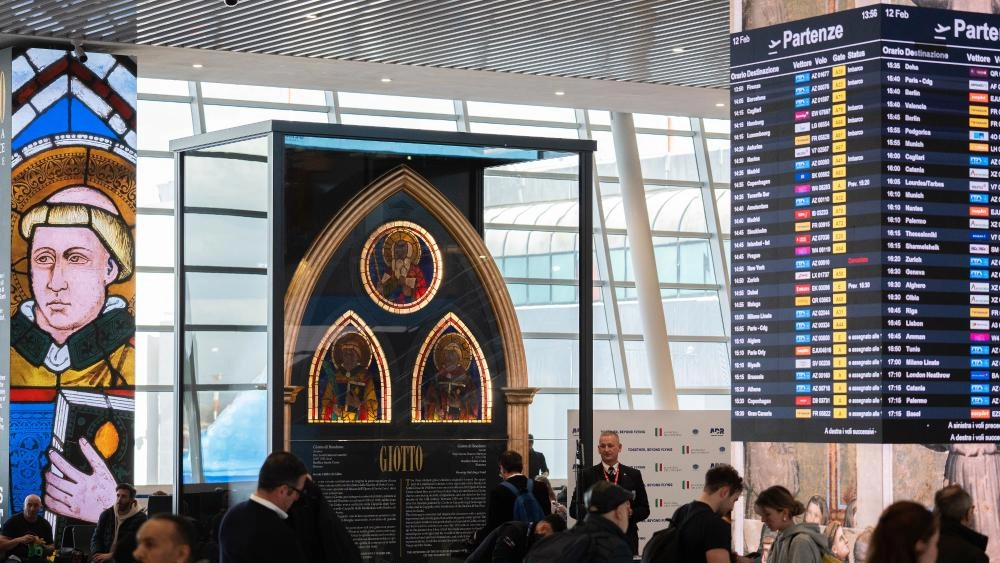
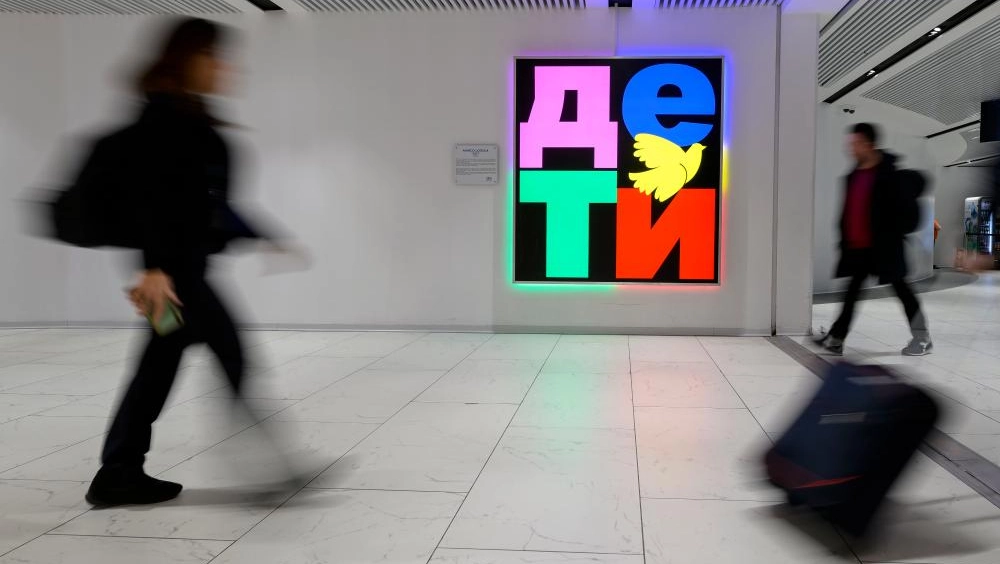
Strolling through Fiumicino’s terminals, you might stumble upon something unexpected: an Etruscan sculpture, a medieval stained-glass window, or a contemporary installation. The airport has become a sort of open-air museum, where works from Italian cultural institutions are displayed in the very places where thousands of passengers pass every day. The wait before a flight can thus transform into a mini-journey through the country’s history and art.
Culture between the gates
Over the years, Aeroporti di Roma has developed numerous collaborations with Italian cultural institutions, hosting concerts, exhibitions, and artistic performances directly within the airport. It’s not uncommon to hear musicians performing between gates or attend events organized in conjunction with prestigious institutions such as the Teatro dell’Opera di Roma or the Accademia Nazionale di Santa Cecilia.
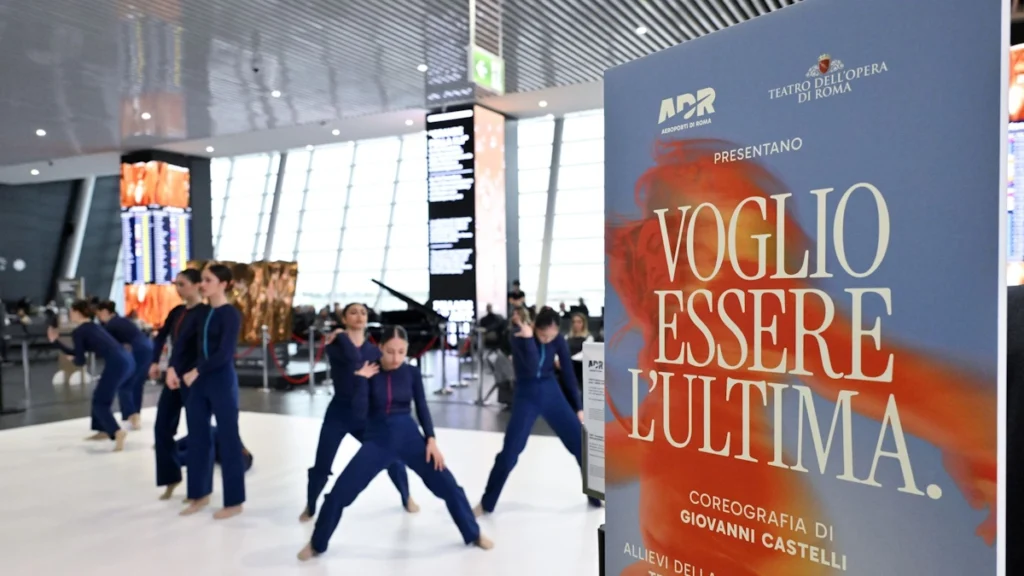
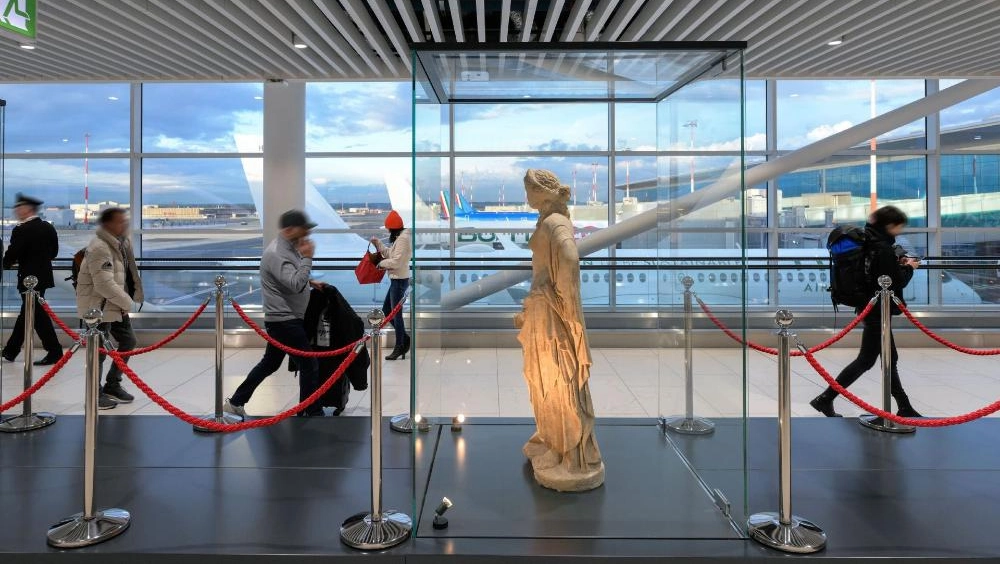
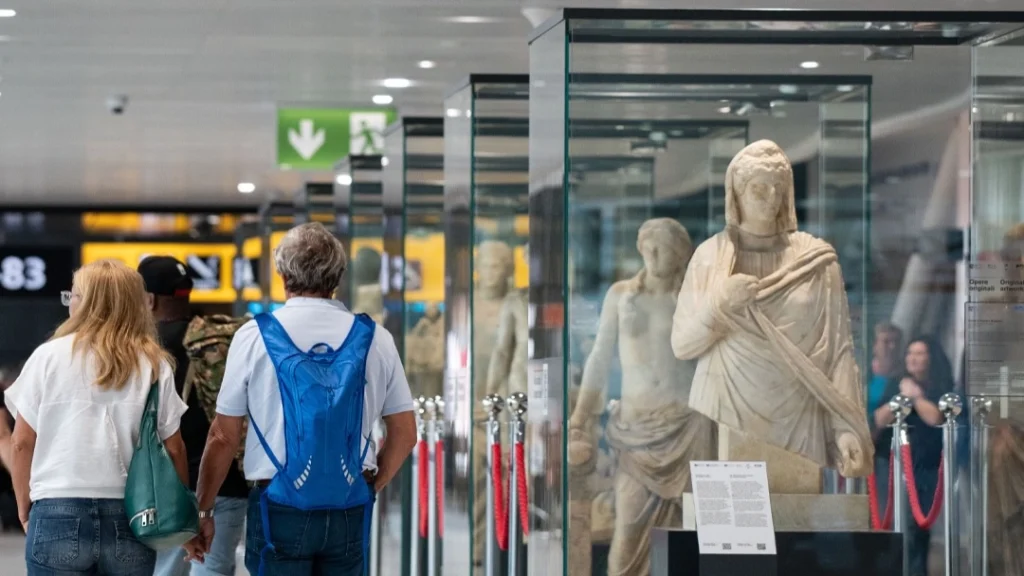
In this way, the airport becomes a space where culture meets travel, transforming an often frenetic moment into a surprising experience for passengers in transit.
The numbers of a large European hub
Behind this cultural dimension, of course, lies a vast industrial machine. Aeroporti di Roma currently manages two strategic airports for the country: Leonardo da Vinci Airport in Fiumicino, dedicated to domestic, international, and intercontinental routes, and Ciampino Airport, used primarily by low-cost airlines, express couriers, and general aviation.
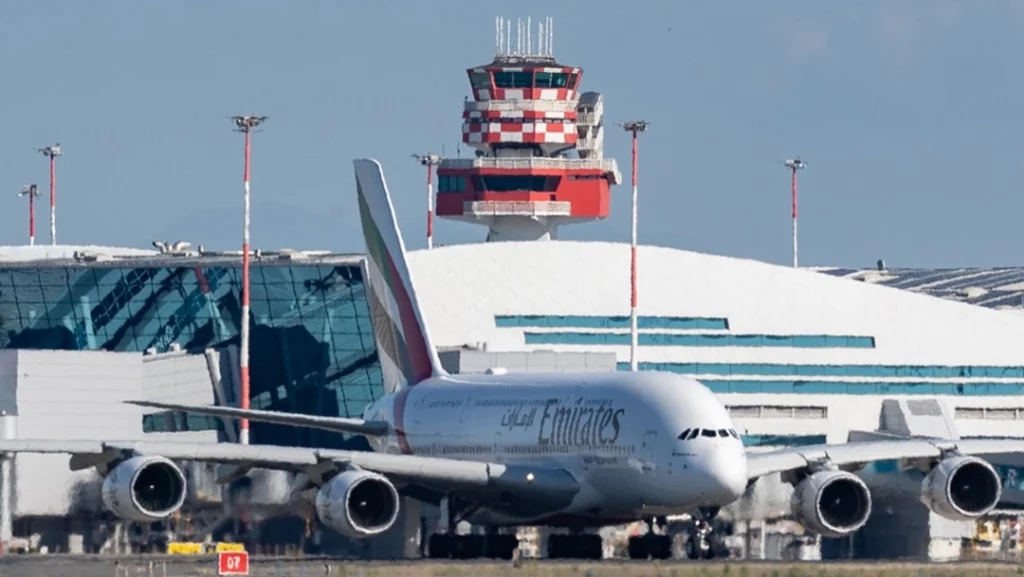
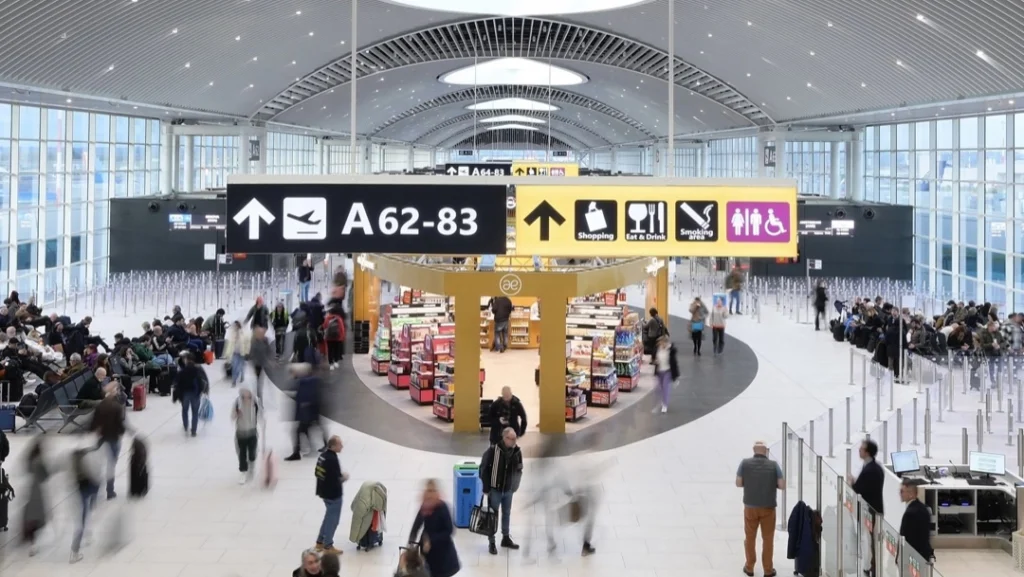
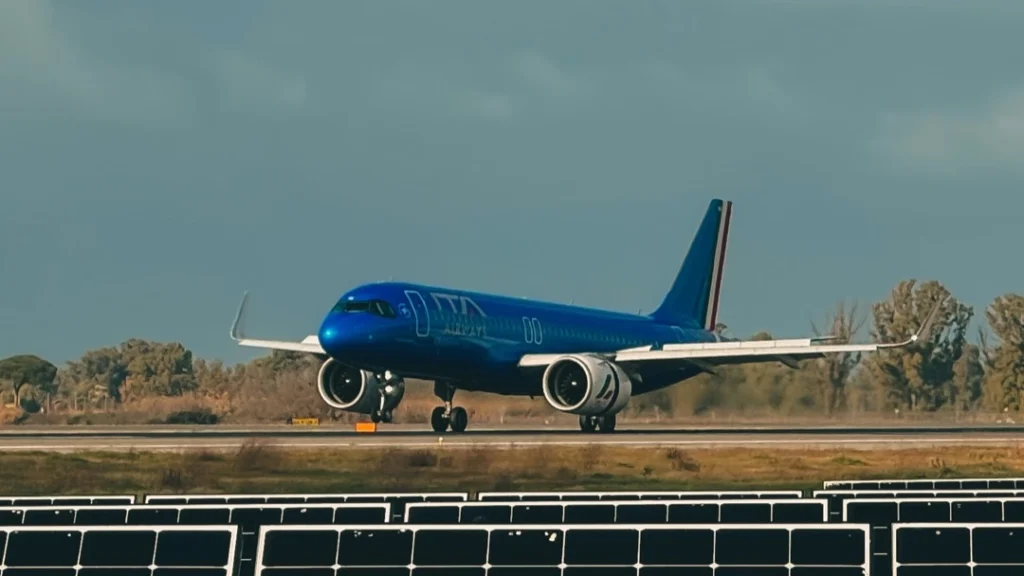
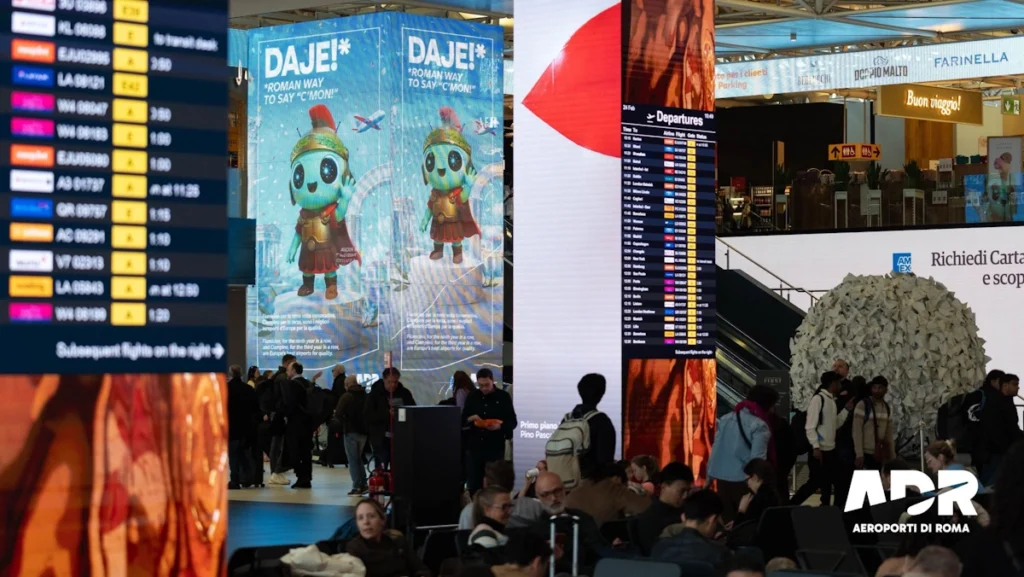
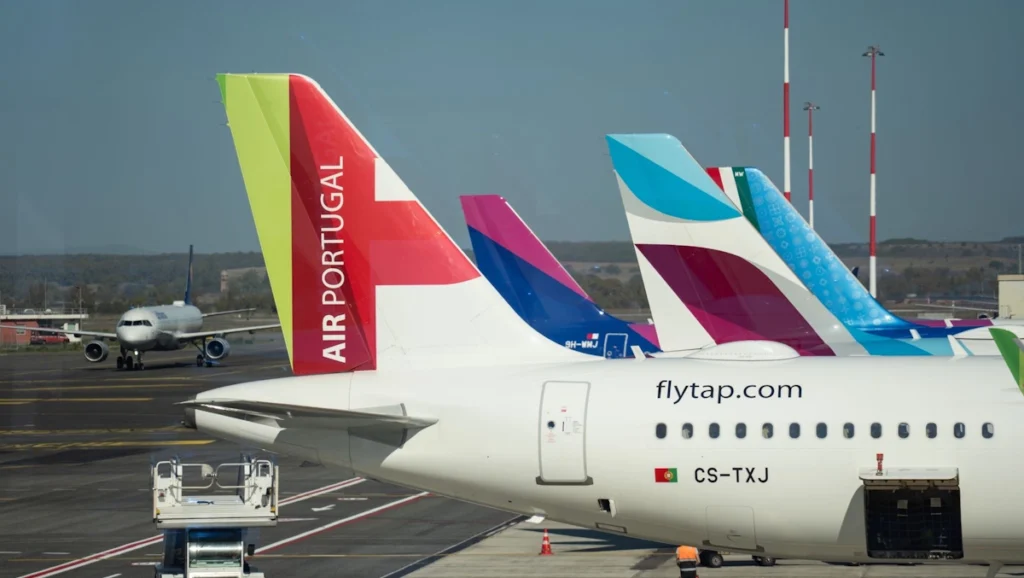
Before the pandemic, Rome’s airport system achieved impressive figures: in 2019, it exceeded 49 million passengers, with over 240 destinations worldwide served by approximately 100 airlines. Economically, Aeroporti di Roma is a solid industrial entity: the company employs over a thousand people directly and, in 2024, recorded a turnover of approximately €1.29 billion and profits close to €290 million, confirming significant growth in recent years.
Innovation and international vision
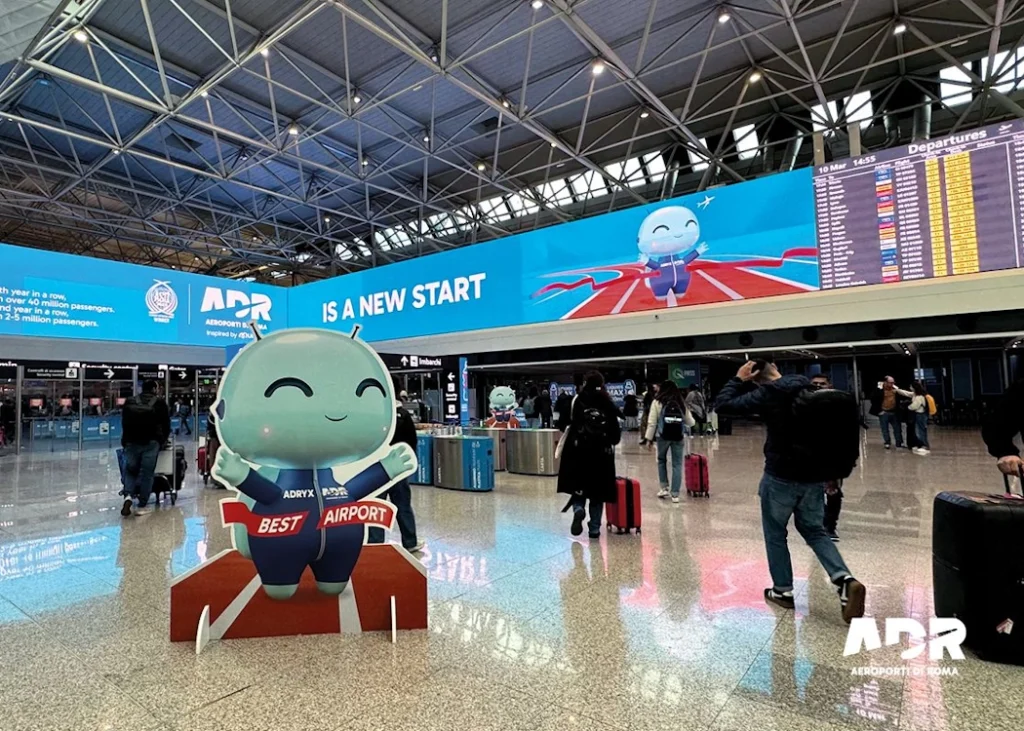
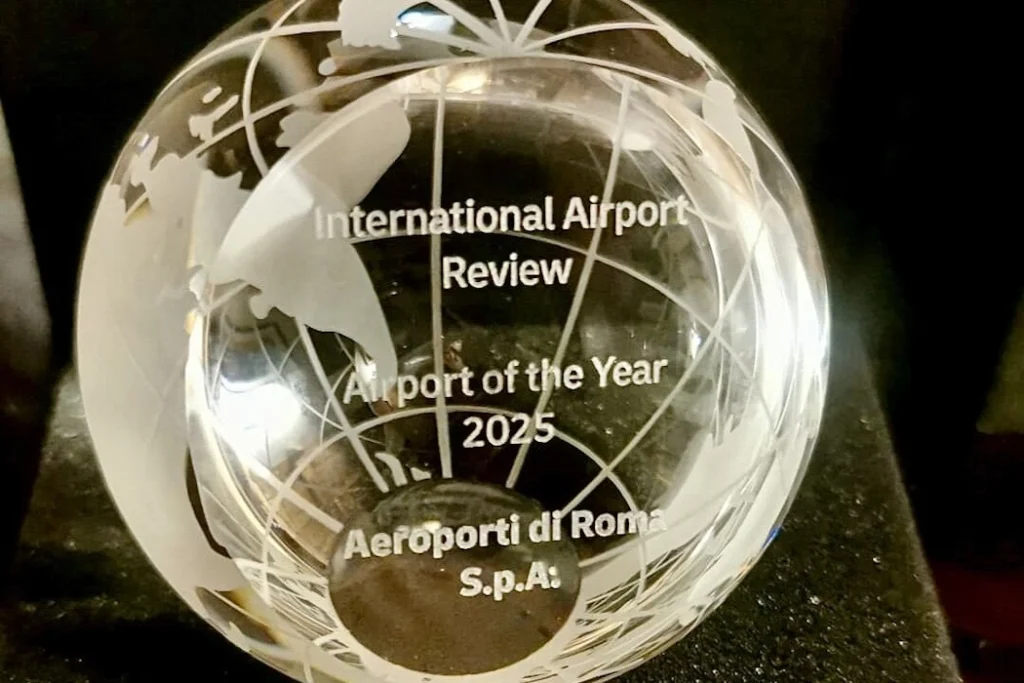
Alongside the numbers, however, lies a vision that looks to the future. Aeroporti di Roma continues to invest in technology, digitalization, and sustainability to make the travel experience increasingly efficient and comfortable. Digital innovation has become a cornerstone of the company’s strategy and, in recent years, has led to major international recognition, including the Best Airport Award from Airports Council International Europe and the Airport Service Quality Award from Airports Council International for passenger service quality. The goal is to maintain Fiumicino’s position among Europe’s best airports and strengthen its role as an international hub.

The first experience of Made in Italy
In the end, it all comes down to a simple yet symbolic moment: when the plane doors open and passengers step onto the tarmac, ready to begin their journey. It’s then that Italy begins to tell its story.
Aeroporti di Roma has chosen to do so through innovation, hospitality, and culture, transforming the airport into the first true Made in Italy experience. For millions of people every year, the journey through our country begins right here.
Congratulations to those who, through hospitality, make Made in Italy known to the world.
Read about other outstanding companies from Lazio.