


That between Domenico Dolce, from Sicily, and Stefano Gabbana, from Milan, is a Made in Italy partnership that unites the country from North to South. However, the needle of the compass has definitely shifted southwards since the brand’s iconography and identity are strongly linked to Sicily and its imagery.
Domenico Dolce, from Palermo, started working in his family’s tailor’s shop at an early age. Stefano Gabbana, from Milan, on the other hand, is a graphic designer by training but has always worked in the fashion world. The two met at work in Milan and made their collaboration official in 1984, creating the ‘Dolce&Gabbana’ label.


After a bubbly but not very easy start in 1980s Milan – their fashion show in the Burghy fast food restaurant remains memorable – their fourth collection awarded their success. They showed for the first time what would later become a brand icon: the ‘Sicilian dress’. Inspired by a petticoat but able to enhance the hips thanks to a particular cut, this dress will become one of the hundred most important dresses ever designed and will inspire many famous fashion photographers.
From Scianna to Madonna: a new iconography is born
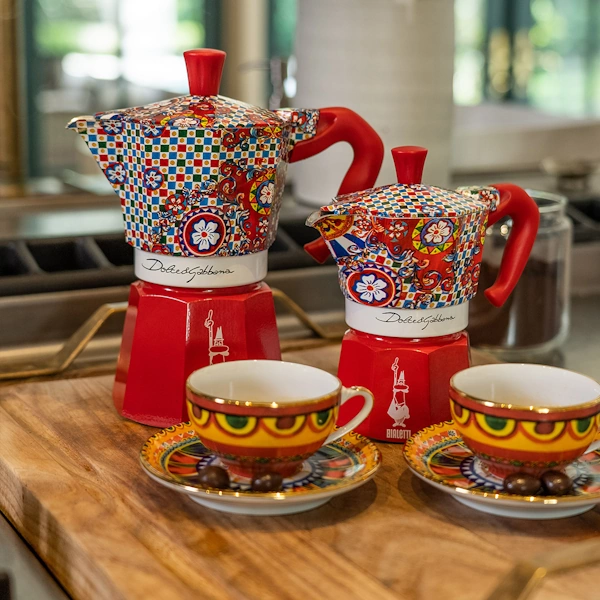
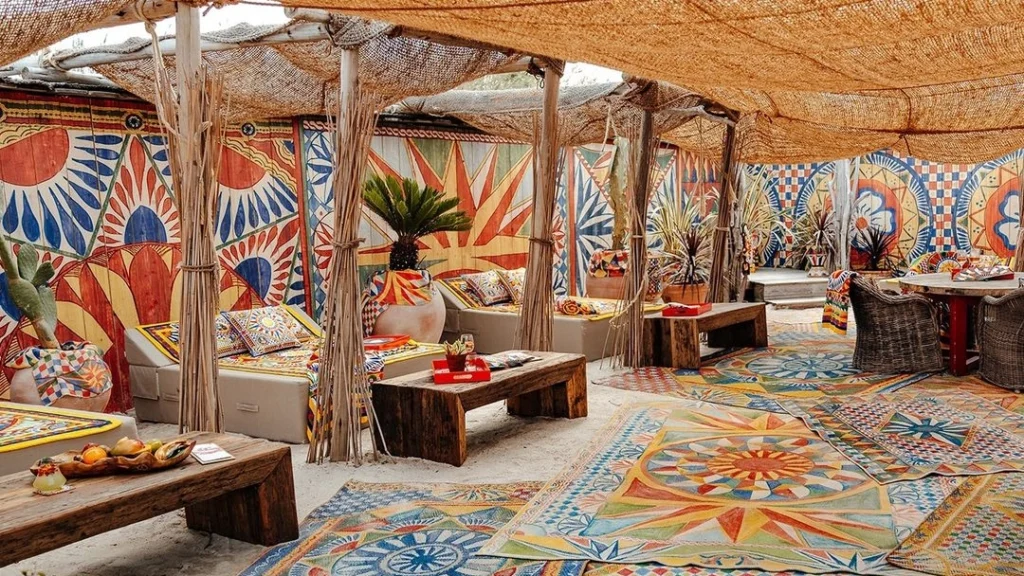
Dolce&Gabbana’s garments thus enter the fashion world with a precise and unmistakable identity: from lace bustiers to animal prints, from corsetry to pinstriped dresses, each collection continually reinterprets the connection with Sicily, even going so far as to use elements of folkloric tradition, including the Sicilian horse-drawn cart, ceramics and puppets. Italy and the Mediterranean are also the inspirational muses of Dolce&Gabbana’s famous advertising campaigns, first of all, the 1987 one in which Ferdinando Scianna photographed top model Marpessa Henninck in the sunny streets of Palermo, capturing the beautiful contrasts of the places and enhancing the female figure of the model.




Dolce&Gabbana launched its first men’s collection in 1990, and in 1994, Ittierre produced and distributed D&G, a line with a younger target group inspired by street style.
The 1990s also began a long collaboration with Madonna, who ordered a special bustier for her film Madonna: Truth or Dare and chose the fashion house for the costumes of several of her tours until becoming a testimonial in the 2010 advertising campaign.


The Dolce&Gabbana universe
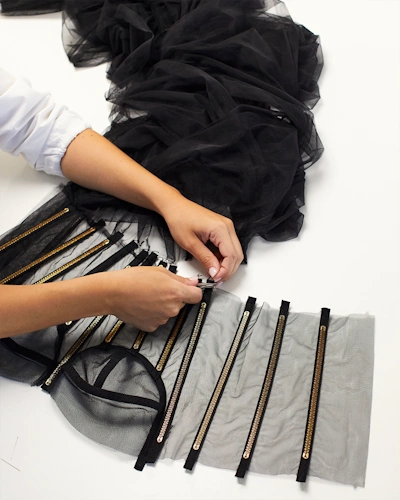
In the 2000s, the brand diversified and expanded its production: clothes were joined by collections for the home, underwear, children’s wear, bags and accessories, as well as beauty and jewellery. Every garment and every item is meticulously designed, and each collection is rich in iconic pieces. Dolce&Gabbana’s creativity has always remained alive over the years, never ageing and maintaining a solid bond with tailoring and craftsmanship. Between 2012 and 2013, the Dolce&Gabbana Alta moda and Dolce&Gabbana Alta sartoria lines were born, which tell the story of Italy through everything that is handmade and with unique pieces that soon become coveted worldwide.


Today, Dolce&Gabbana has a turnover of almost two billion Euros, with the USA and China being the main markets; it has 5400 employees, six operating units, and 343 boutiques worldwide.
Congratulations to those who bring Italy and its Mediterranean atmosphere to the world through their creativity!
Learn about other Made in Italy outstanding companies in fashion.